Self help Islam and Anxiety

Self help Islam and Anxiety

Anxiety self help

#combatdepression

Self help Islam and Anxiety

We all experience difficulties in our life’s and as Muslims we should know that this is a test from Allah. In fact that this is something Muslims firmly believe in, that going through difficult times is inevitable.

{Do people think they will be left alone and they will not be tried? …} ( Al-`Ankbut  29:3)

And certainly, We shall test you with something of fear, hunger, loss of wealth, lives and fruits, but give glad tidings to As-Sabirin (the patient ones, etc.). Al-Baqra Verse No:155

Even the Prophet went through difficult times. For examples when his son Ibrhim passed away to the next life. The prophet felt sadness, expressed his emotions through tears and grief.

Then he wept more and said, “The eyes are shedding tears and the heart is grieved, and we will not say except what pleases our Lord, O Ibrahim! Indeed we are grieved by your separation.”  Bukhari; Book 23, hadith 1228

Allah gives us reward through affliction

It’s important to remember that as Muslims Allah has not left us but rather he wants us to get closer to him however we must also seek professional help where necessary. For example when we re ill we go to see a GP to aid recovery. Just like if you are suffering from a Mental Health condition you should seek help from a Qualified professional Counsellor that is in congruence with your faith.

Allah encourages us to seek help

Anxiety is something that we cannot escape given the adversities that we may experience everyday. Anxiety is a condition that doesn’t show itself out of nowhere. It slowly gets on us without us really knowing.

Depression is a condition that brings us down and makes us feel like life is not worth it anymore. It slowly creeps its way into our system and turns us into a kind of person who isn’t enthusiastic about life anymore.

What makes matters more alarming is that both of these mental conditions are very common in every part of the world and may inflict anyone. Fortunately, they can be overcome by knowing how to cope with anxiety and depression.

I will be discussing some of the ways on how to know if you have anxiety or depression, how anxiety leads to depression in the long run and vice versa, as well as some tips on how to overcome them. Overall we’ll discuss how to cope with anxiety and depression in the comfort of your own home.

What is Anxiety and How it May Lead to Depression and Vice Versa

What exactly is anxiety?

Anxiety is often described as an unpleasant feeling that we all experience such as always being uptight, nervous, tense or irritable. It may affect how we think and behave as excessive worry may prevent us from doing things that we need and want to do. Anxiety causes us to feel worried for a long period of time even if the worry doesn’t have any basis.

But it’s normal to worry or feel anxious about some things in life. In fact, it can often be helpful. For example, worrying about how you’ll pass your exam, driving test,  acing that interview, you then prepare yourself by studying and as a result of being motivated by that concern is good. How do you know if it is good or bad anxiety? Well according to research It’s been found that symptoms of anxiety are much more frequent when the condition known as generalized anxiety disorder (GAD) is present. General worriers tend to spend an average of 56 minutes a day worrying, while people with GAD often spend over 300 minutes a day worrying — over five times as much.

Another thing to know about anxiety is that it goes hand in hand with depression. They are two very different conditions but are often seen in tandem with each other. If you want to know how to cope with anxiety and depression, then you need to understand how one relates to the other.

Sometimes having anxiety may lead to depression because being constantly worried will drag you down, filling you with negative thoughts that eventually lead to depression. Having depression may also lead to anxiety because depression slows productivity which eventually leads to long-term worries and anxiety. Once you know how to cope with anxiety and depression, you can relax without having to worry about one condition breeding the other.

Symptoms of Anxiety

For symptoms, there are four categories of symptoms to know whether you have anxiety or not, namely: physical, thoughts, emotions, and behavior.

  • Let’s start with the physical symptoms that you may have. Some symptoms would include tension, muscular pain, dizziness, chest pain, trembling, shaking, and palpitations.
  • For thoughts, you would often ask to worry about if something bad happens, you would always look at the worst case scenario, your mind is always on alert, and you often worry all the time.
  • For emotional symptoms, you would often feel nervous, panicky, or stressed. You’d also feel very irritable and would have a short temper.
  • Lastly, you would have behavioral symptoms. If you feel like wanting not to do things you like, often pace around, get spooked easily, talk too fast, and get angry at people too fast.

Self-Help Tips for Anxiety

Now that we know more about anxiety and its links to depression, let’s go deeper into knowing the tips on how to cope with anxiety and depression. In the next two sections, we’ll be learning effective and proven methods on how to cope with anxiety and depression.

The prevention tips are split into two kinds, the mental tips, which are tips that are focused on trying to change our state of mind and the lifestyle tips which focus on lifestyle changes that may affect our mental state.

Mental Tips

  1. Understanding more about anxiety

If you want to know how to cope with anxiety and depression, you have to understand them. Let’s start with anxiety.

One thing that we should understand is that anxiety is a daily part of our lives. We experience anxiety every day when we look at our unpaid bills, when we are called to the boss’ office or before we receive our report card. The anxiety that is caused by adverse situations is known as a fight or flight response that we develop in order to help fight away the danger. This is actually an evolutionary response that our ancestors used back in the days of primal survival. However, our minds have already been accustomed or used to the fight or flight response, so even if there is no need to turn on our “survival mode,” the mind still turns it on. It is because of this that we still experience anxiety even if there is no danger but just some small adversity. In a sense, anxiety is our fight or flight response which is kicked into auto-pilot.

  1. Control Unhelpful Thoughts

What makes anxiety a danger to our mental state is the fact that when we worry about adverse situations that can be rather unrealistic. When this happens, it’s very important to know how to control these unhelpful thoughts. For example, a person with social anxiety who is about going into a room full of people may think that no one will like him or her. This is an example of a ‘worry’ feeling that really has no basis. To control unhelpful thoughts, we must first identify it.

Below are the cues to show what an unhealthy thought is:

◻ Predicting the Future

◻ Assuming What Another Person is Thinking about You

◻ Exaggerating or Blowing Situations Out of Proportion

◻ Pressuring Yourself to Follow a Societal Standard

◻Using the Outcome of One Situation as a Generalization for the Outcome of All Other Situations

◻ Labeling Yourself

When you are thinking thoughts that fall into any of these categories, it will help if you list them down. After you do, ask the following questions:

  • Does My Thought Have Any Basis?

_____________________________________________________________________

_____________________________________________________________________


  • What Category Does My Unhelpful Thought Fall In?

_____________________________________________________________________

_____________________________________________________________________


  • What Would I Tell a Friend If He or She Have This Unhealthy Thoughts?

_____________________________________________________________________

_____________________________________________________________________

_____________________________________________________________________


  • What are the Advantages and Disadvantages of Harboring this Thought?

_____________________________________________________________________

_____________________________________________________________________

_____________________________________________________________________

_____________________________________________________________________

_____________________________________________________________________


  • Is There Any Way to Perceive the Situation?

_____________________________________________________________________

_____________________________________________________________________

_____________________________________________________________________

_____________________________________________________________________

_____________________________________________________________________


  1. Improving your problem-solving skills

Beefing up on your problem-solving skills is one very good way to help your anxiety problems. We would generally develop anxiety whenever we have problems piled in our thoughts. When these unresolved problems just pile up and pile up, we would drown in them and not solve any of them. Just think of it like getting a credit card loan– if you don’t pay the principal amount, the interest just piles up until we drown in it. In order to fix this, we have to create a system on how we can fix our unresolved issues one by one until they’re totally wiped out.

Here is a systematic outline on how to approach problems one by one:

  • Make a List of Your Problems and List them in Order of Priority
  • Identify the Problem (What exactly is the problem?)
  • Make a List of Possible Solutions for the Problem
  • Choose the Best Solution from the List
  • Create the Steps on How to Carry Out the Solution
  • Carry Out the Solution and Evaluate Whether it Worked
  • Choose a Different Solution if it Didn’t Work

With these steps, you can systematically solve each of your problems one by one.

  1. Learning how to reduce the amount of time you spend worrying

Lastly, you have to learn how to decrease your worry time. One technique to do this would be to create a “worry time”. Outside of your worry time, probably for just 20 minutes, try to take out all thoughts in your head. When you’re in your worry time, time yourself with a timer so that you can limit it. While you’re in your “worry time,” try to make up as many solutions as possible and list them down. Try to solve them again in the next worry time.


Lifestyle Tips

Those are some mental tips on how to curb your anxiety. However, for you to overcome anxiety and depression fully, there are some lifestyle changes that you need to obey, such as:

  1. Eat Well

Always eat a balanced meal curbing unhealthy processed foods, too much sweets, and too much carbs.

  1. Exercise Regularly

Regular exercise helps you emit happy hormones and create a “high” that can curb anxiety.

  1. Learn to Relax

Pick up some activities that can help you relax like sports, yoga, or meditation.

  1. Do Something You Like

One of the symptoms of anxiety is that you stop doing things that like to do. Try going back to doing what you like to do so that you can be happy.

  1. Avoid Alcohol and Drugs

Whatever you do, avoid drugs and alcohol because it won’t make your anxiety go away. It would make you even more destructive.

  1. Talk to a Loved One

Lastly, talk to a loved one. Opening up to a trusted family member or friend will help you, not only to vent out your worries but also to make you feel that there is someone there for you.

Read our next article on depression or book an appointment


What is Islamic Counselling Psychology? part 1

What is Islamic Counselling Psychology? part 1

What is Islamic Counselling Psychology ? Part 1

Muslim Psychology is a growing field today that helps people in a number of areas. You can learn to live with others better, learn to cope with yourself, and the daily activities that happen in your life. Psychology is not a simple matter that you can do by yourself; an expert in the field is needed for it to be effective. It is a very powerful and transformational discipline that helps people find their purpose and helps them celebrate life, as well as be grateful of what they have. Islam and Psychology are almost related with one another since their ultimate goal is for people to attain personal well-being.

History of Islamic Psychology

It was during the Golden Age of Islam when Islamic scholars have took a keen interest in the concept of psychology and its connection to mental health. It was then at that time in which mental disorders were carried out and treated in hospitals. Even though psychiatric hospitals were already constructed in Baghdad in 705, as well as in Cairo in 805, it wasn’t until Bakar Muhammad Zakaria Al-Razi, a Muslim physician, first introduced the concept of psyhcotherpay  in 925 CE that the Islamic scholars and the entire Islamic community started understanding mental health in a different light.  It was Islamic scholars who started equating mental illness with physical ailments and that the mind and body shared a tangible link. Bakar Muhammad Zakaria Al-Razi bravely tackled the definition, misconceptions, and symptoms of mental health.

Although psychotherapy was popularly developed by Westerners, it was actually a part of treating mental disorders even before the Western Society had introduced the notion. In the early 20th century, the Islamic psychotherapy was not only making headway in Muslim countries but as well as in Western perspectives. This led to the many advances in the study of the mind, setting up more psychiatric hospitals, and the recognition of Islamic physicians in a wide range of mental ailments.

Overview of Islamic Psychology

Islamic Psychology, or commonly known with Muslims as Ilm al-Nafs, is both a medical and philosophical study of the nafs [self or psyche] from an Islamic point of view. It was written in the scripture (Sura 4:5 of the Qur’an) that the mentally ill must be cared for, must be treated humanely, and be told good words by a custodian or the state itself. It was also learned that mental illness is associated with physical sickness; thus, the study of Psychology flourished in the Islamic culture.

Islamic Psychology is fascinating to learn as you learn about yourself and learn to feel good and trust Allah at the same time, you can earn His love (Surah Al-Imran 3:160). As you also learn about behavior modification, you can learn to motivate yourself to give up bad acts, forgive those who caused you harm, control your irritation, rage and anger, and live more happily and peacefully (Surah al-Anfal 8:53). The most important part is you becoming a better person and nurturing your relationship with Allah. The clinician may use in clinical practice both psychological interventions and religious and spiritual exercises to aid therapy.

Islamic Psychology Today

However, today it was becoming evident that there is little to no consideration about the use of Psychology on the variety of mental and emotional turmoil and instability experienced by a number of Muslims. Contemporary Psychology has been neglected and religious rituals like prayers and fasting are given focused to achieve healing and peace. If you examine Muslims today, a number of them are experiencing a number of psychological problems that need to be addressed. Islam and Psychology, although these have a number of similarities, they must still function mutually to achieve remarkable results. One must not be chosen to be superior or effective over the other. Medication and therapy should be done to re-balance the body which religious rituals and practices alone might fail to achieve. Islam is offering preventive measures as it integrates mental and physical aspects to balance human dimension, but if you need curative procedures, making use of Psychology really helps the individual.

The problems of the mind and body must be dealt with properly. It is believed that if the body is sick, the psych fails to reach its maximum potential and vice versa. Achieving this balance between the mind and body will benefit many aspects of your life especially the spiritual aspect. Here are some ways that healing your mind and body has great effects for you:


  1. You will become happier. As you improve your mood, you can enhance your relationships with other people especially with your loved ones.
  2. You will become more accepting with your own and other people’s flaws, thus making you less judgmental.
  3. You will become more tolerant and respectful of others even those with varying beliefs and principles as yours.
  4. You become more compassionate, sympathetic and forgiving.
  5. You begin to feel more peaceful and serene; difficulties will become more manageable and controllable.

Conclusion

Empowering yourself with the knowledge of Islamic Psychology will give you more opportunities for introspection and understanding your own emotions which in turn will produce heart warming and satisfying relationships. Learning Psychology in the light of Qur’an helps you improve your life in general. Islamic Psychology must be encouraged in Islam and the work of a therapist or counsellor must be appreciated and seen as very beneficial to the whole Muslim society.

Book a counselling appointment

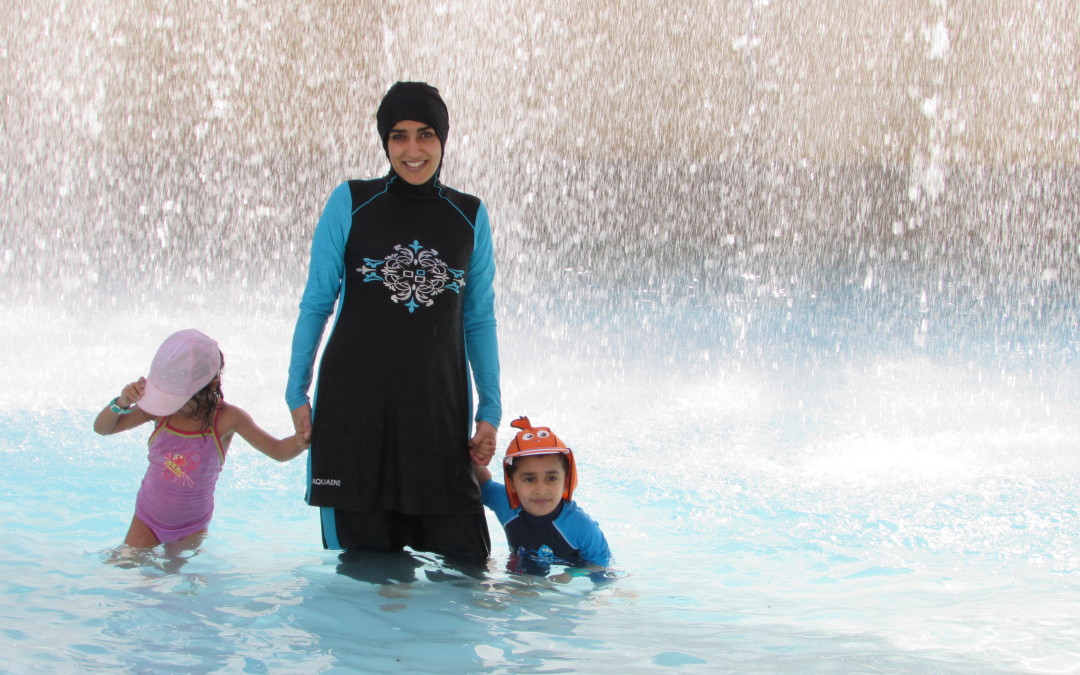
Easy, Breezy, Burkini!

Easy, Breezy, Burkini!

#wearwhatyouwant

Amidst all the cacophony against racism, sexism, bigotry and what not, you’d think people would stop writing about them to deduce the controversy; but we all know that doing so is a lost cause. So, if you are thinking, given the title, that this would be some fashion article, then I must ask you to look elsewhere. However, if you wanted a little enlightenment on what a burkini is and the issues concerning this ensemble, then this might just suit your fancy. Gear up!

A ‘Burkini’ is a not-so-subtle name for swimwear that is industriously engineered by a Lebanese-born Australian, Aheda Zanetti. Zanetti is now a trendsetting fashion designer, working specifically to cater to Muslim women’s taste. She transfigured this ensemble upon witnessing her niece having trouble getting into the netball team because she was wearing a hijab.

“She looked like a tomato she was so red and hot!” says Zanetti.

Talk about sweating it out! She then fished out some leftover garment, set the gears running, and voila! The Burkini was birthed, a wetsuit complete with an elastic hood that resembles the hijab in functionality and use, as well as bottoms made of lycra and polyester which makes it light enough to enable wading through water with ease. Genius!

Despite the good intentions behind the creation of burkini, some people are still finding it hard to respect others’ decision of wearing a burkini or even hijab in public.

I was 15 when I first started to put on the headscarf, and it was my family at first that questioned my decision. I always responded with the intention of being closer to God and besides, it’s my free will, right? If nuns can wear it, so can I! I have never looked back, and I can’t imagine my life without it. There was also the question about the beach situation where once I got stuck coming down the water tunnel slide whilst wearing my abaya and joggers but as the Burkini came out, my worries wafted away, and brilliance took over. When I took my children to Dubai, they loved seeing me swim with them or should I say not getting stuck on the water slide. What could go wrong, right? Well, this is exactly where I am wrong.

I’m sure you’ve all heard about the debate concerning this beloved swimsuit.

Now let me tell you first that I love the UK as the people here allow me to practice my religion freely. I’m probably more British than not, and I feel at home here more than any other country. I have many friends from various ethnic and religious backgrounds, and they have never questioned why I choose to wear the headscarf. In fact, I get a lot more respect for wearing it and for believing in what I do. In France apparently, more than half of the country’s population voted to ban the wearing of the burkini as it is considered a sign of regression, oppression and backward thinking as if it supported the enslavement of women. Who are the oppressors, the people that choose to tell women what they should and shouldn’t wear?

But you see, some people believe that Muslim women are being forced into religious roles and behaviour rather than seeing these women as independent beings who give their consent where it is due. Contrary to popular belief, the burkini was made with the purpose to ease women’s plight where it did not compromise their faith. Muslim women are given freedom and are not slain to prejudice when they choose otherwise. I, myself, find the hijab very freeing and empowering as it liberates me from society’s expectation and I am not expected to conform to the latest fashion trends. If I chose to bathe in the sea sporting this hijab, it would be because I chose to do so and not because I would be the butt of scrutiny by my ethnic society if I didn’t.

With that being said, I would deeply appreciate it if Muslim women in France would be free to wear what they want to to the beach. Female scrutiny is getting old, guys! Let’s just move on, shall we? It’s all just letting people be free to do what they want to do. Not everything has to have a Shakesperian row! You do you, and I do me (respectfully, of course).

Where there is a will…He makes a way

Where there is a will…He makes a way

#combatdepression

Gentle soul

Strolling down life’s veins

Searching for peace … tranquility

As a river flowing through seamlessly

Often concealing aches and pains

Hoping for relief… respite… succour

Gentle soul

Stumbled and fell so many times

Yet, back on your feet defiantly

Sanitizing the wounds silently

Expunging traces… stains… lines

Ofttimes unsighted by tears… downpour

Gentle soul

Never lose hope!

He the Majestic, Creator of all souls

Has put remedies amongst His creation

By His Mercy, Grace and Compassion

Help is at hand … reach out to Sakoon

by Nassira Merahi

Islam and Depression

Islam and Depression

#combatdepression

Sakoon in conjunction with South Bank University is hosting an event to help individuals overcome depression and get an insight into it’s causes and symptoms.

This is a free of charge and spaces are limited so sign up now.

Sign up

Facebook

Muslims can never be Depressed

Muslims can never be Depressed

Islam and depressionMuslims Can Never be Depressed   #combatdepression

Have you ever heard the sheikh or khateeb tell you, “We are Muslims.  We have Islam.  We have Allah.  How can we ever get depressed?  Only people who are far away from Allah can ever get depressed.” 

Chances are, if you are like me, this type of “reminder” might depress you even further.

Why are you depressed?

I remember a sheikh at our local masjid giving a talk, commenting about peace and tranquillity, and then mentioning, “Wallahi, there is no need for psychiatric institutes and psychological clinics.  How, when we have the book of Allah?” 

The director of my university in Medinah mentioned that the key to happiness is tawhid.  And he left it at that and I found this generally to be the case when we speak about these issues to some Imams and Sheikhs.

Well, it’s obvious that these people are extremely content with Islam as their religion, and that’s why they feel strongly about what they are saying.  But does that rule out the fact that Muslims cannot get depressed?  What’s going on here exactly?

Well I must tell you, that I have dealt with all the most severe mental disorders since I became a practicing Muslim.  The most severe OCD, waswaawis, scrupulosity, and most recently, the most severe depression I have ever experienced in my life.  And yes, I am a practicing Muslim, memorized Quran, going to the masjid for the prayers and pray five times day. I make dua, I say astaghfirullah (asking forgiveness from Allah) etc.  What is the source of my depression?  My relationship with the Quran, and not being able to connect to it in a healthy way.

What’s that?  The Quran is the source of my depression?  Well not really.  It’s not the Quran.  It’s not Islam.  It’s the baggage that I brought along with me into Islam that became exasperated through the religion.

People who are at higher risk for developing depression are those who have self esteem problems, being pessimistic, traumatic or stressful events, history of mental health disorders such as anxiety or post traumatic stress, medications such as sleeping pills or high blood pressure medications.

Depression is more than just being simply unhappy or fed up, it’s a real illness and real symptoms as well as physical symptoms. Let me tell you I feel alone, broken, empty inside, no motivation and tired.

It may be difficult to explain in a short article such as this one, but what happens is a person who has become depressed has fallen into complete despair over their soul for an extended period of time.  Whenever that happens, and they have given up on their own soul after ignoring it for a long enough period of time, they do things that push it away further, to push away the pain they may have experienced initially.  It is a common thing with people who suffer from PTSD.

People used to say to me get over it, read more Quran and I’m in a place where you don’t get much support which made me even more depressed. I eventually found Sakoon counselling services who offered sessions via Skype, It was like a relief that there were Muslims who understood what I was going through and helped. Depression is not sadness.  Spiritually, depression is a loss of vitality, an emotional death of the soul and spirit of a person, to where they become purposeless because of suppressing and despairing over their true selves.  Sadness and grief, if not dealt with for a long enough time, and not channelled in a healthy way can also lead to depression.

Physiologically, the nervous system of a person has become stressed for such a long period of time, that it becomes overstimulated, which causes the systems of stress and anxiety to start occurring.  Because the amygdala, which is emotional center of the brain is part of the nervous system, this too starts behaving erratically, thereby causing the symptoms of anxiety and stress which causes people to become further worried and continue the cycle.

Do I have any basis for what I’m saying here?

Well, for starters, my personal experience in dealing with these issues for many years.  And secondly, there is an entire chapter in the Quran that is dedicated to dealing with self esteem issues and emotional issues.  There are healthy ways to deal with the emotions and unhealthy ways, which lead to depression, and other psychological disorders.

The article started by stating Muslims can never get depressed but it is the opposite, Muslims can get depressed and it has no association with your level of faith. What I can tell you that Muslims do suffer worse because there are more dynamics to consider which isn’t covered in mainstream counselling.  That’s why it’s important to work with a counsellor that understands your faith as well as applying Islamic counselling in the therapeutic process. #combatdepression

By Amir Yusuf edited by Ayesha Aslam

Book an Appointment